

Developing a mobile application
Escape Liège
A mobile app for an urban escape game, already used by over a hundred players.
Client's need
Turn a paper-based experience into an immersive mobile experience.
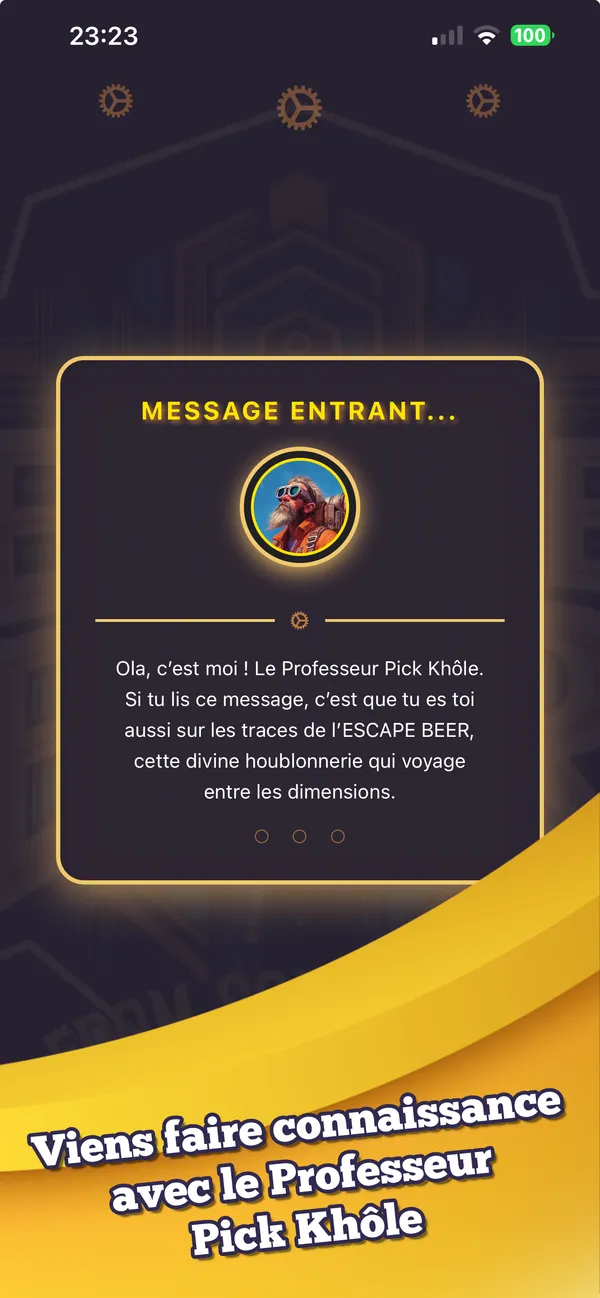
A word from Professor Pick Khôle
"Staring at my app without installing it? Careless. Scan the code, grab a beer, and prove your brain cells can handle the streets of Liège!"
Available on the stores
The context
The client, already active in the escape game industry, had decided to launch a new experience: an urban escape game through Liège, combining puzzles, local heritage, and tasting stops along the way. The whole thing ran on a paper roadbook found inside a can, with QR codes linking out to external web pages to validate each puzzle.
The problem
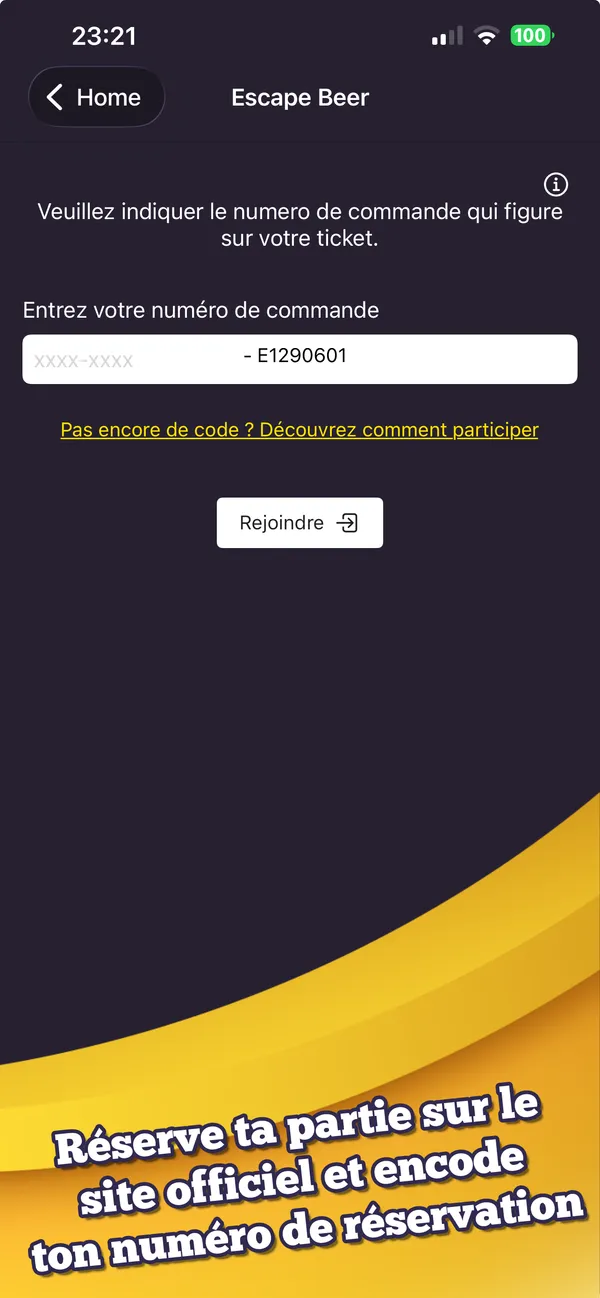
That paper format held the experience back in several ways: no automatic answer validation, an immersion-breaking jump to an external web page for every QR code, and a group dynamic where only one person actually followed the roadbook while everyone else just tagged along. There was also no way to see real-time progress, or to evolve the game without reprinting the materials.
The thinking
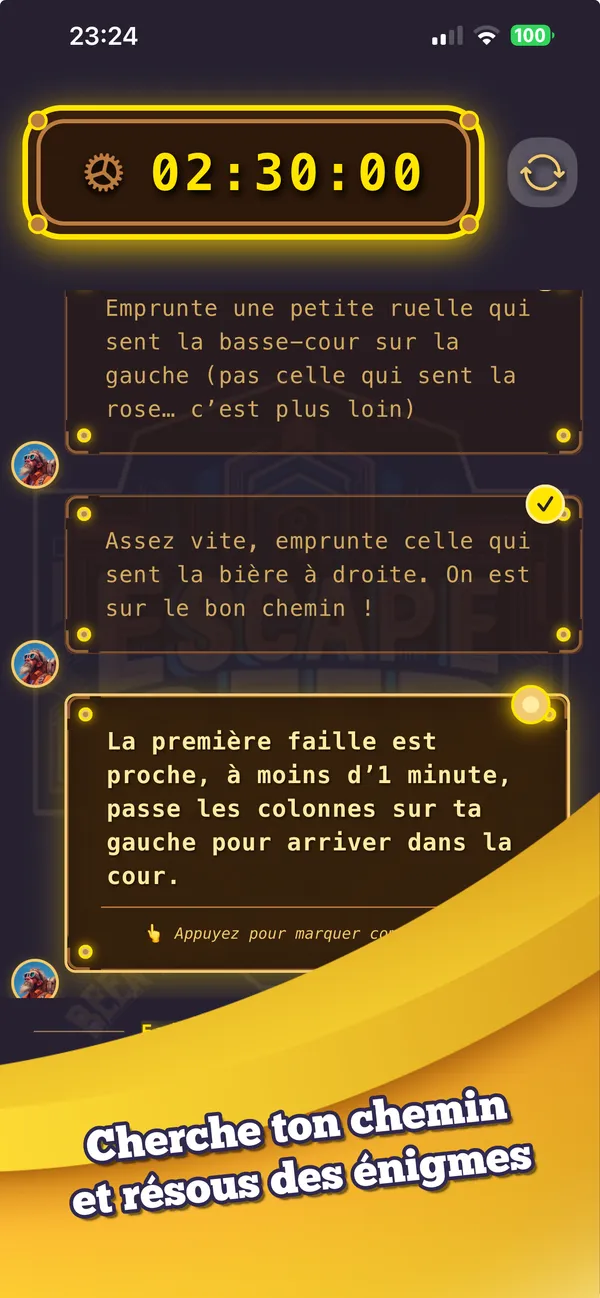
Rather than a simple digital version of the roadbook, this needed an app built for the field, for group play, and for multiple languages — with progress synced live across a team's phones, and an architecture flexible enough to support other scenarios beyond the Escape Beer down the line. With no mockups from the client, I also took on the full design of the app.
The solution
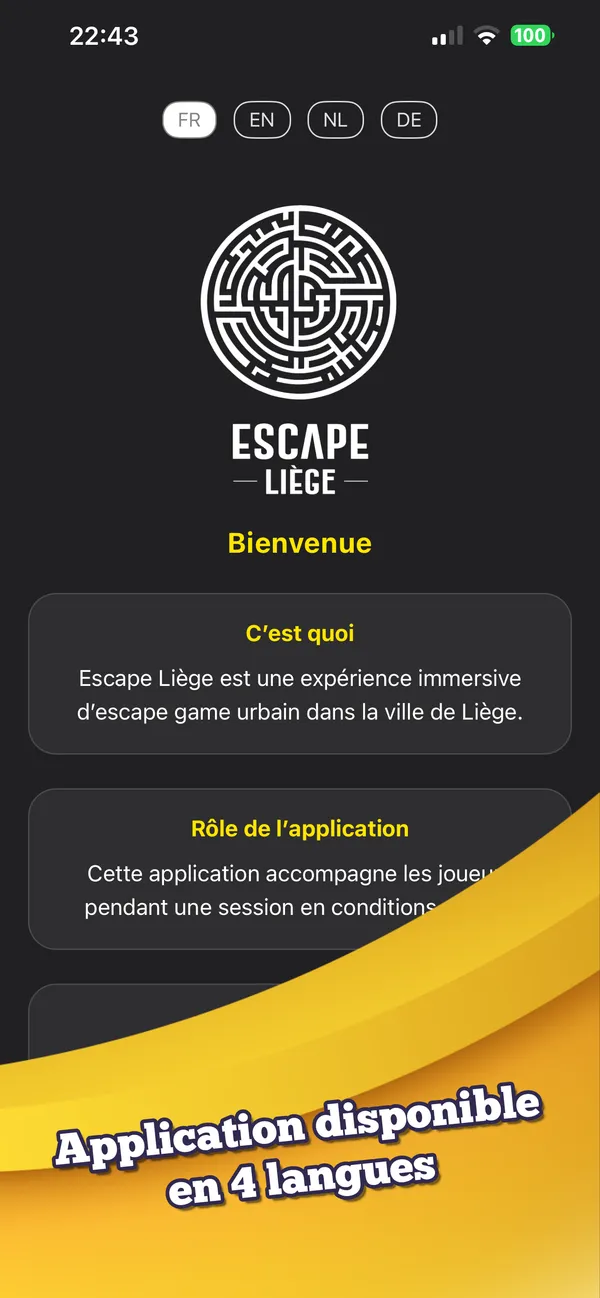
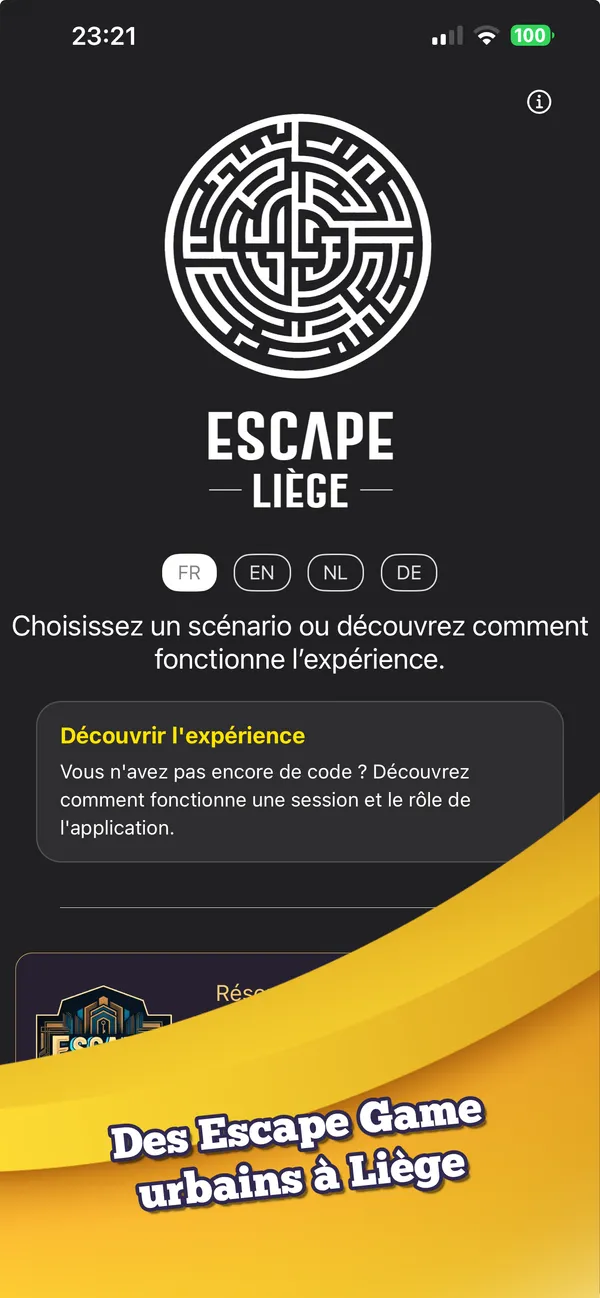
I designed, built, and deployed the app and its custom backend: real-time sync between teammates, automatic session recovery after a dropped connection or dead battery, automatic reservation imports, cultural content woven into the route, and an immersive messaging system voiced by Professor Pick Khôle. All available in 4 languages from launch.
The result
A far more immersive, collaborative experience with no more jumping between paper and browser, and a technical foundation ready for new scenarios. Since launch, over a hundred players have used it in real conditions, without a single technical incident.
What if it were your business?
The same principles could be used for:
- → a booking or ticketing application
- → an interactive visitor trail
- → a training or client-tracking application
- → an internal mobile tool for field teams
Have an idea or a problem to solve ?
Let's talk about it, no strings attached.
Let's talk about your project